Five Questions Visitor Attractions Should Be Asking More Often
By Rashi Maithul · · 10 min read
Reflections from my first Visitor Attractions Conference, and why counting visitors is only half the story.
Visitor attractions juggle a lot. They have to bring people in, handle rising costs, generate income, and create experiences that stick with visitors long after they leave. And all of this often starts before the first cup of coffee.
And then there's the weather. Apparently, it has a seat at the strategy meeting now.
ALVA reports that June and July were more than 2°C warmer than usual. Household budgets are under pressure; entertainment ticket prices rose 6.5%, the fastest increase in leisure. AA rainy forecast can be enough to derail a day out, even when the sun eventually appears.
Visits to ALVA sites in 2025 were still 7% below 2019 levels. So the question isn't only how many people came. It's who didn't, why, and what the ones who did actually experienced.
What stayed with me after VAC
I went to my first Visitor Attractions Conference (VAC) to hear what was keeping the sector up at night (hopefully not just the budgets). I left inspired, challenged, and with more questions than one blog post can reasonably hold. Naturally, I decided to try anyway.
After years in destination marketing, I know how much effort it takes to get people through the door. Now, as I build BAENAV, I am learning what happens once they arrive.
Attractions don't lack data. Many have plenty: ticketing systems, surveys, reviews, footfall reports and financial dashboards. But one gap kept tapping me on the shoulder. Counting arrivals is the easy part. Understanding what visitors actually experienced is much harder, and it's where most of the answers live. What's missing are the stories behind the numbers.
Here are five questions I'd love to see more attractions exploring, each with evidence from VAC, plus five small experiments you can run without a big budget.
1. Why aren't people visiting, and what would change their minds?
I asked a group of industry leaders what they most wanted to understand about their visitors. "Why aren't they coming?" one replied, with a nervous laugh. The sort that suggests this is less a hypothetical question and more an industry-wide headache.
Visitor numbers are a beautifully precise record of everyone who showed up. They say nothing about everyone who didn't, and that's a big crowd. In England, 41% of adults visited a museum or gallery in person in 2024/25, down from 43% the year before.
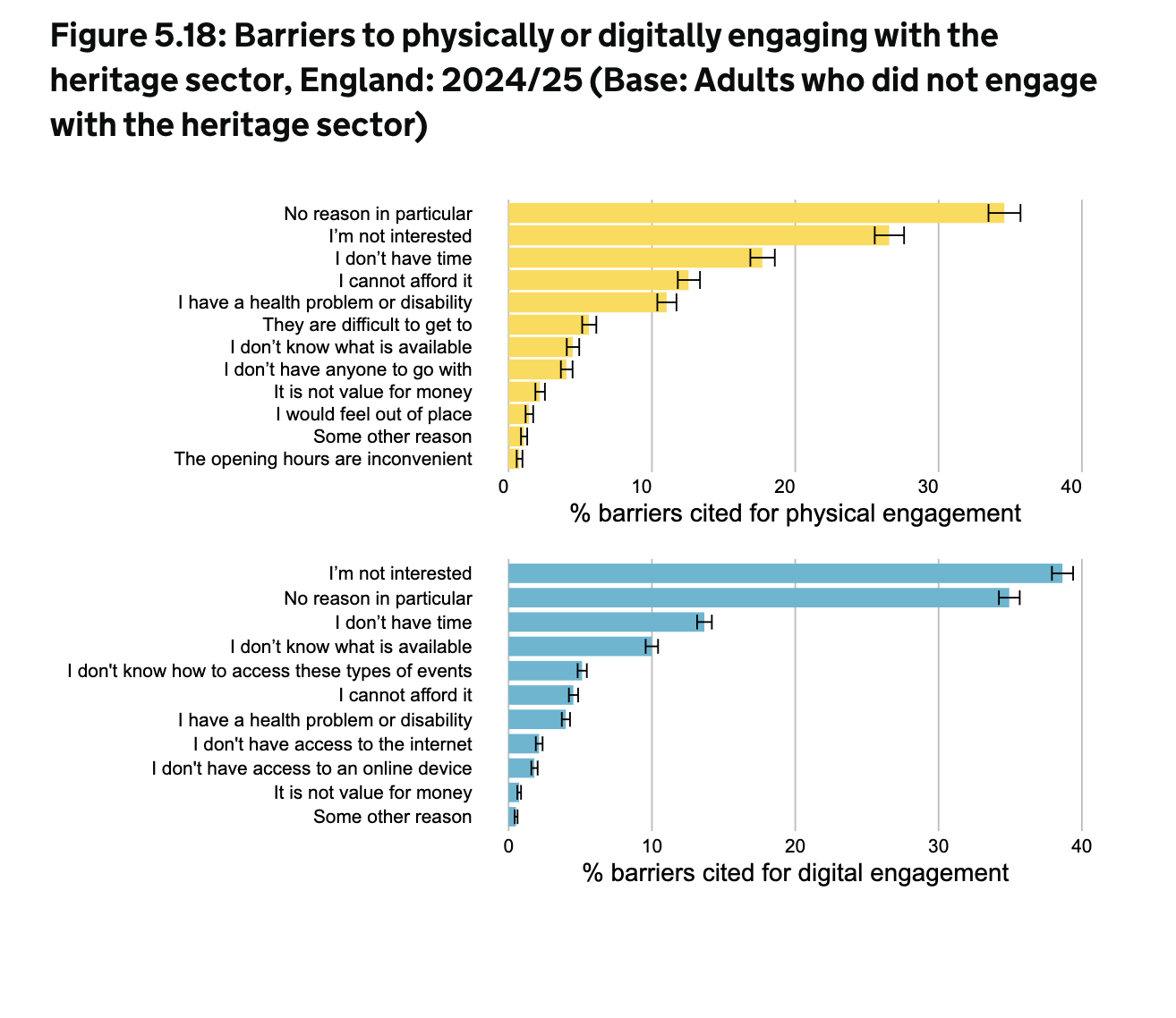
When non-visitors were asked why, cost wasn't the top reason. The leading answers were "no reason in particular" (33%) and "I'm not interested" (29%). Yet visiting runs at 30% in the most deprived areas and 49% in the least deprived. "Not interested" may be the polite way of saying "not for people like me".
VAC added two more reasons the spreadsheet won't show you.
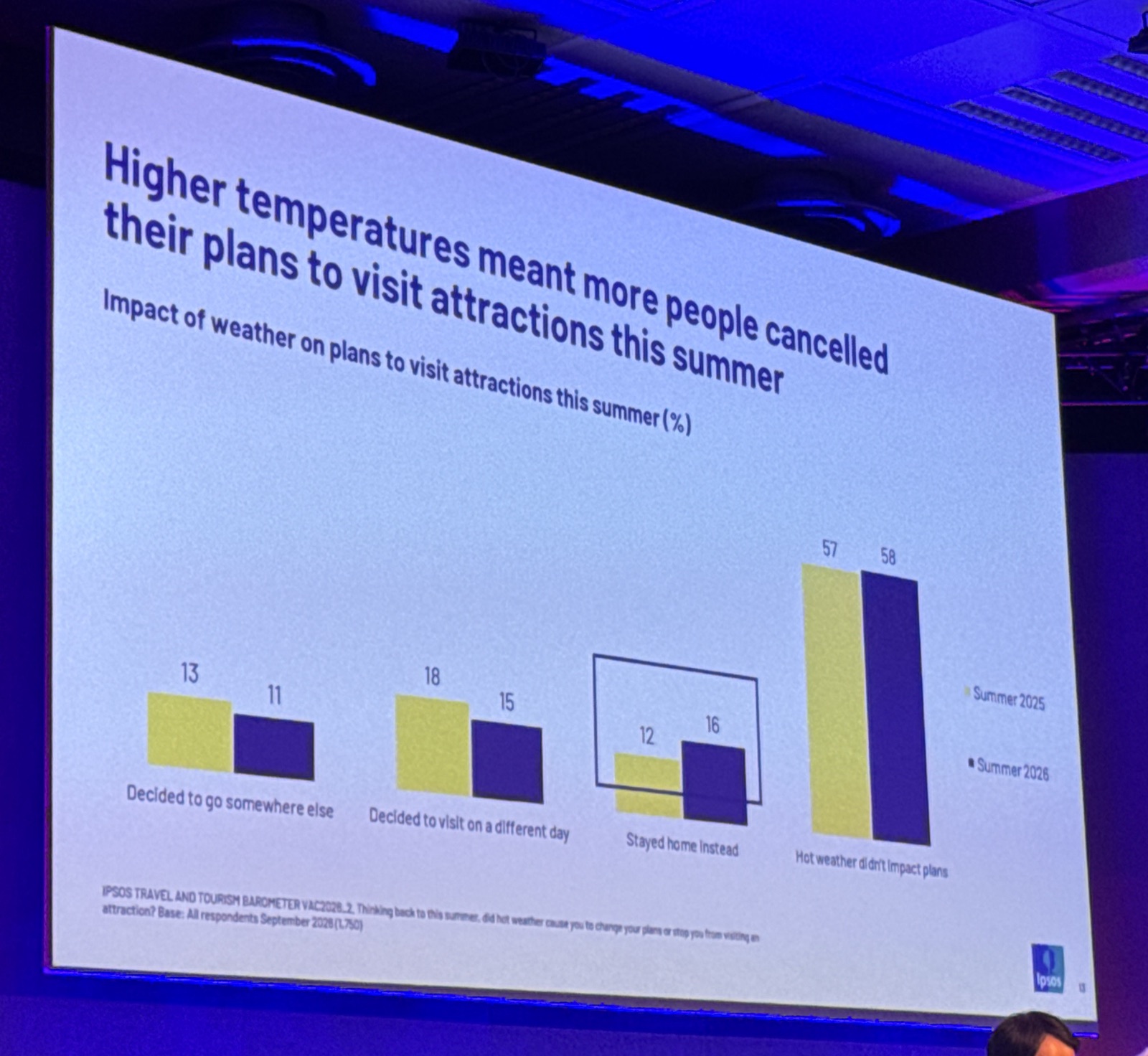
The weather. Ipsos found that 16% of people stayed home because of this summer's heat, up from 12% last year. Another 15% moved their visit, and 11% went somewhere else entirely. The Met Office panel heard that people stay away when the forecast merely looks rainy. The sun can come out all it likes; the decision was made at breakfast.
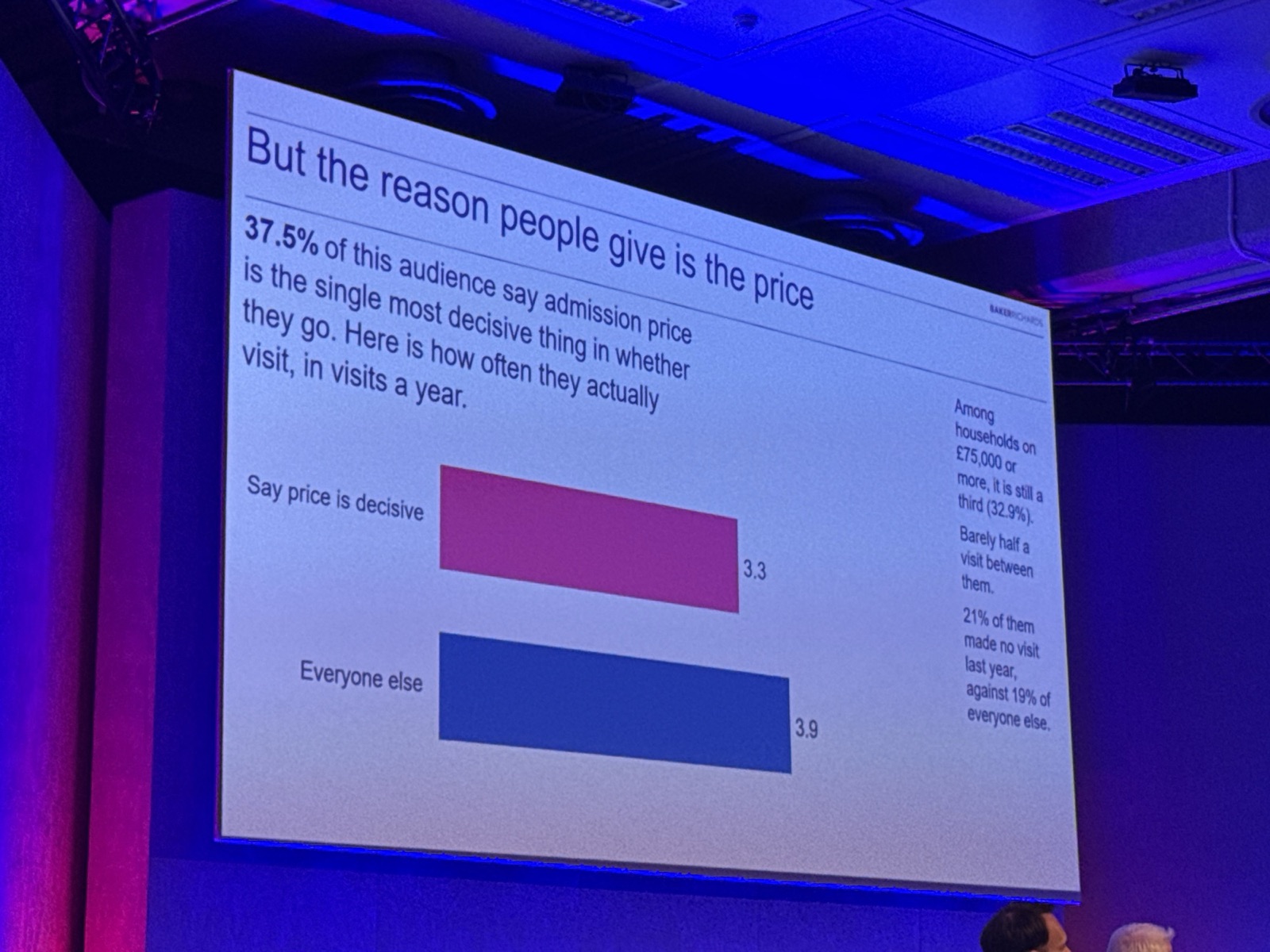
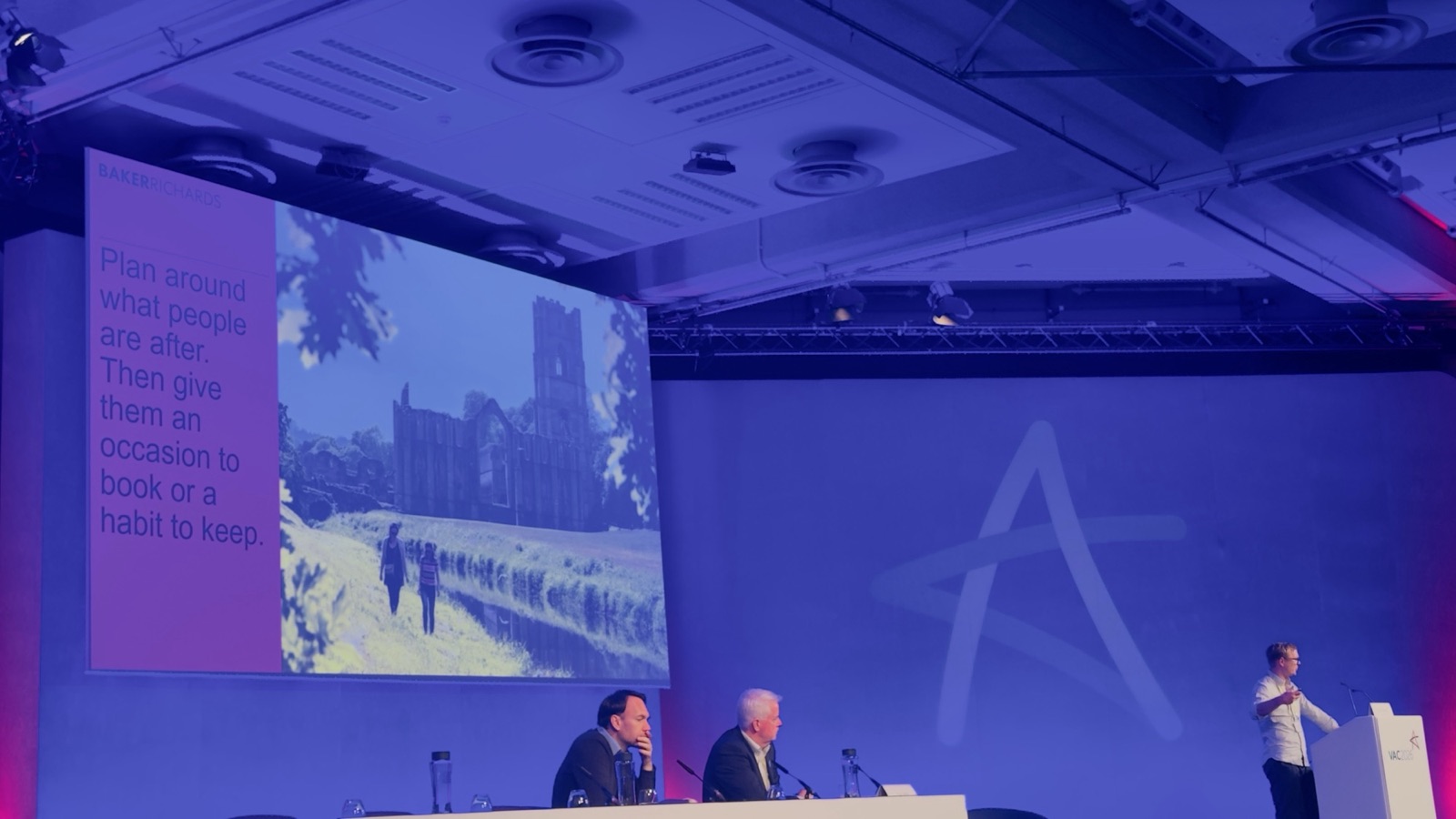
Price, or what people say about price. Baker Richards found that 37.5% of people say admission price is the single most decisive factor in whether they go. Yet they visit 3.3 times a year, against 3.9 for everyone else. Barely half a visit apart. On their last free Saturday, 7.5% went somewhere cultural. Take money out of the equation and that roughly trebles, while staying at home almost disappears.
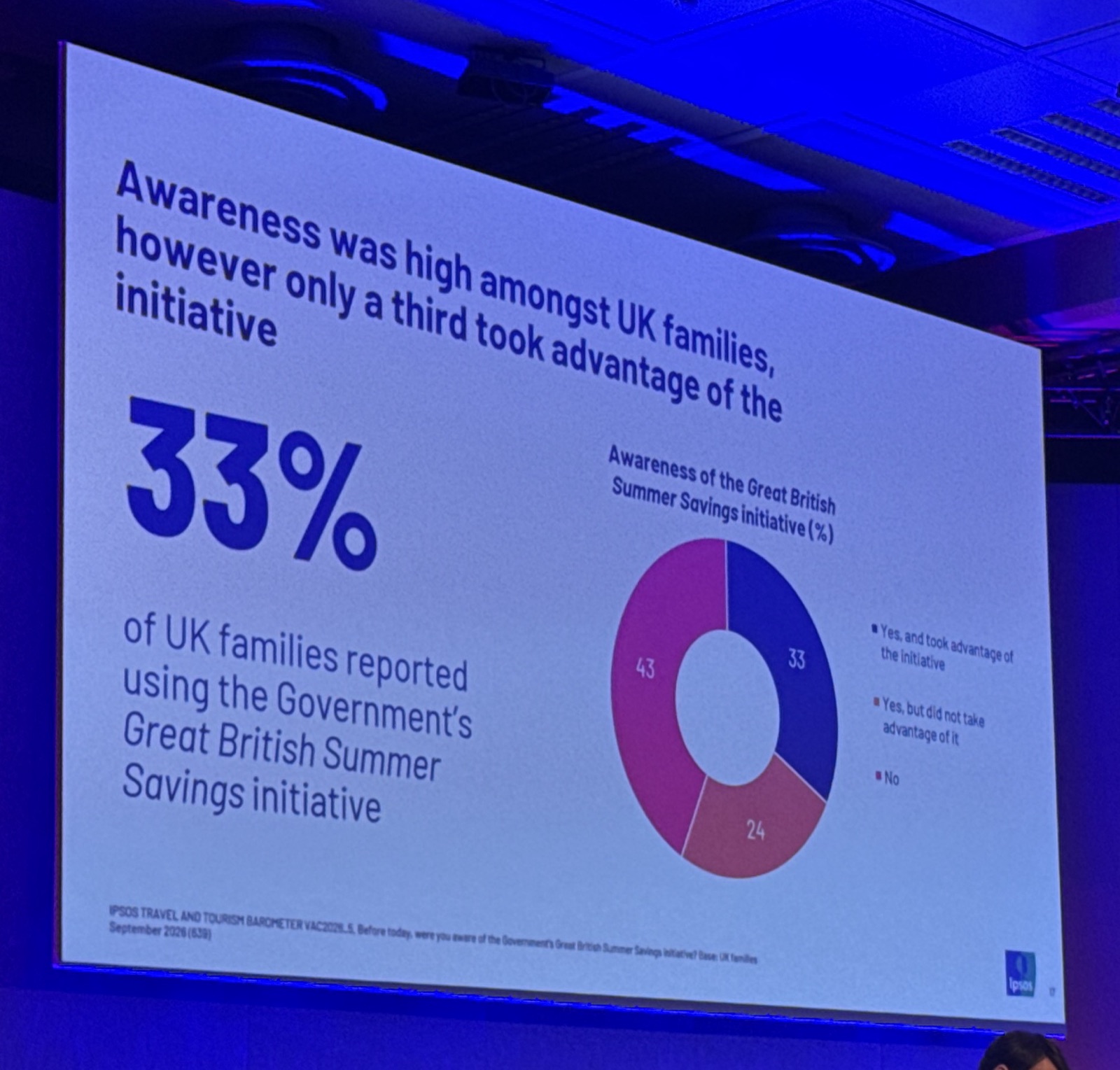
So price matters. But it's often standing in for a bigger question: will this be worth it? Families knew about the government's Great British Summer Savings initiative, yet only 33% used it. Beyond discounts and promotions, "the ultimate driver of visits is a compelling offer."
Sometimes the reason is price. Other times, it’s a missed bus, a bad weather forecast, or a family unsure if there’s enough to keep everyone entertained, adults included. And sometimes, people just need a reason to say, "Right, we're doing that this weekend."
2. What are visitors missing, struggling with or wishing they could discover?
A visitor might spend three hours at an attraction and still miss the one thing that could have made their visit memorable.
They might walk past an extraordinary story, hunt for the café, miss an accessible route, or hover politely, unsure whether they're allowed to touch something. They might also have a brilliant question that no sign, map or leaflet answers.
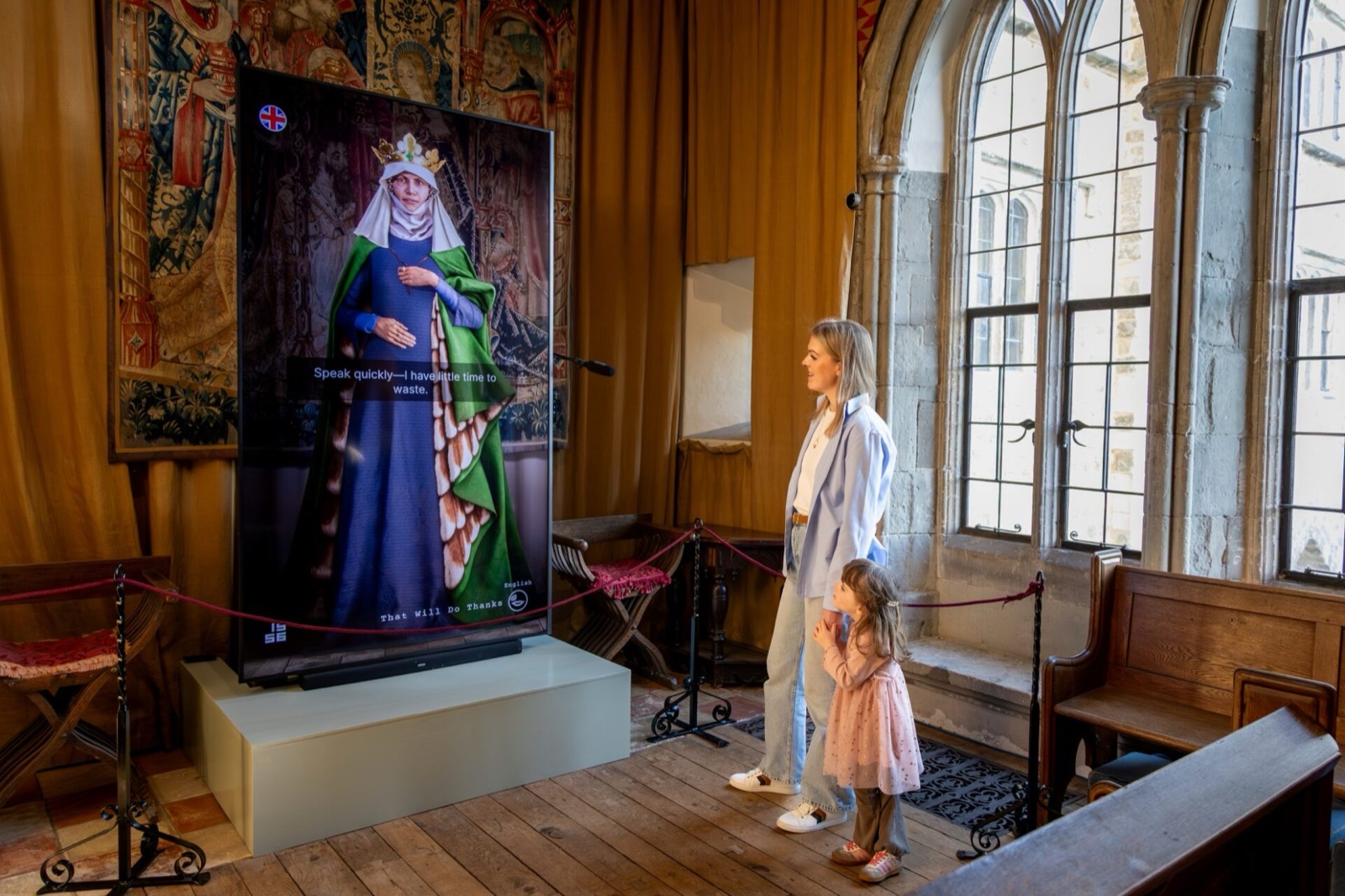
Helen Bonser-Wilton, CEO of Leeds Castle, shared a great example. They brought Eleanor of Castile, a medieval queen, to life as an AI avatar, built on careful research and strong guardrails. Visitors have asked her more than 41,000 questions, and 88% were about her life. That's 41,000 moments of curiosity the castle can now actually see. Seven centuries on, and she's still taking questions.
That pattern could reshape interpretation, wayfinding or programming. And no, the answer isn't necessarily another sign. We should probably first check whether anyone reads the existing ones.
3. What makes a visit feel worth the money?
One phrase from VAC stuck with me more than any statistic: people want joy for money, not value for money. Bernard Donoghue OBE of ALVA shared it, and it reframes the whole pricing debate. Visitors aren't just weighing what they pay against what they get. They're thinking about how a visit makes them feel: special time, with special people, at a special place.
And "worth it" means very different things to different people. David Reece of Baker Richards shared a segmentation called "Four people who look identical on a spreadsheet":
What predicts which group someone falls into is what they want from a day out, how much they spend on leisure, and whether they're members. Not age, gender, income or region. A Sociable earning under £30,000 will happily pay £31 for a standard visit, more than a Purist earning over £75,000 (£23). Somewhere, a pricing spreadsheet is quietly reconsidering its life choices.
The same ticket can feel like a bargain to one visitor and a stretch to the one standing next to them. Affordability matters, especially once travel and food are added on. But price alone doesn't tell us whether people felt their money was well spent.
You might hear about a favourite exhibition or an unexpected discovery. You might also learn the café queue ate half their afternoon. Not quite the souvenir anyone planned to take home.
4. What happens between footfall and spend?
Footfall tells us how many people came through the door. Retail and catering figures tell us what they spent. The interesting story lives in the space between them.
Did visitors know about the extra experience on offer? Did they want to buy something but couldn't find it? Did they spend less because they were disappointed, or because they'd already had a wonderful day and the gift shop simply couldn't compete?
At St Michael's Mount, the team wanted to know why retail was down. Fewer people, or people spending less? Working with Infin8 Growth, they lined up till data against the days, the weather and visitor numbers, and found gaps between their ticketing data and pricing assumptions. The interesting stuff was hiding in the join. "You can look at data, but not feel it."
The point isn't to turn every visitor into a transaction. It's to make it easier for people to discover things they care about.
5. What evidence would actually change our next decision?
This might be the most important question. Attractions collect data from ticketing, surveys, reviews, CRM platforms and visitor counts. Yet more data doesn't automatically mean more clarity. Sometimes it just means more tabs open.
A dashboard says attendance fell. A review says someone disliked the café. A survey says visitors enjoyed an exhibition. What connects them? And what would convince the team to do something differently?
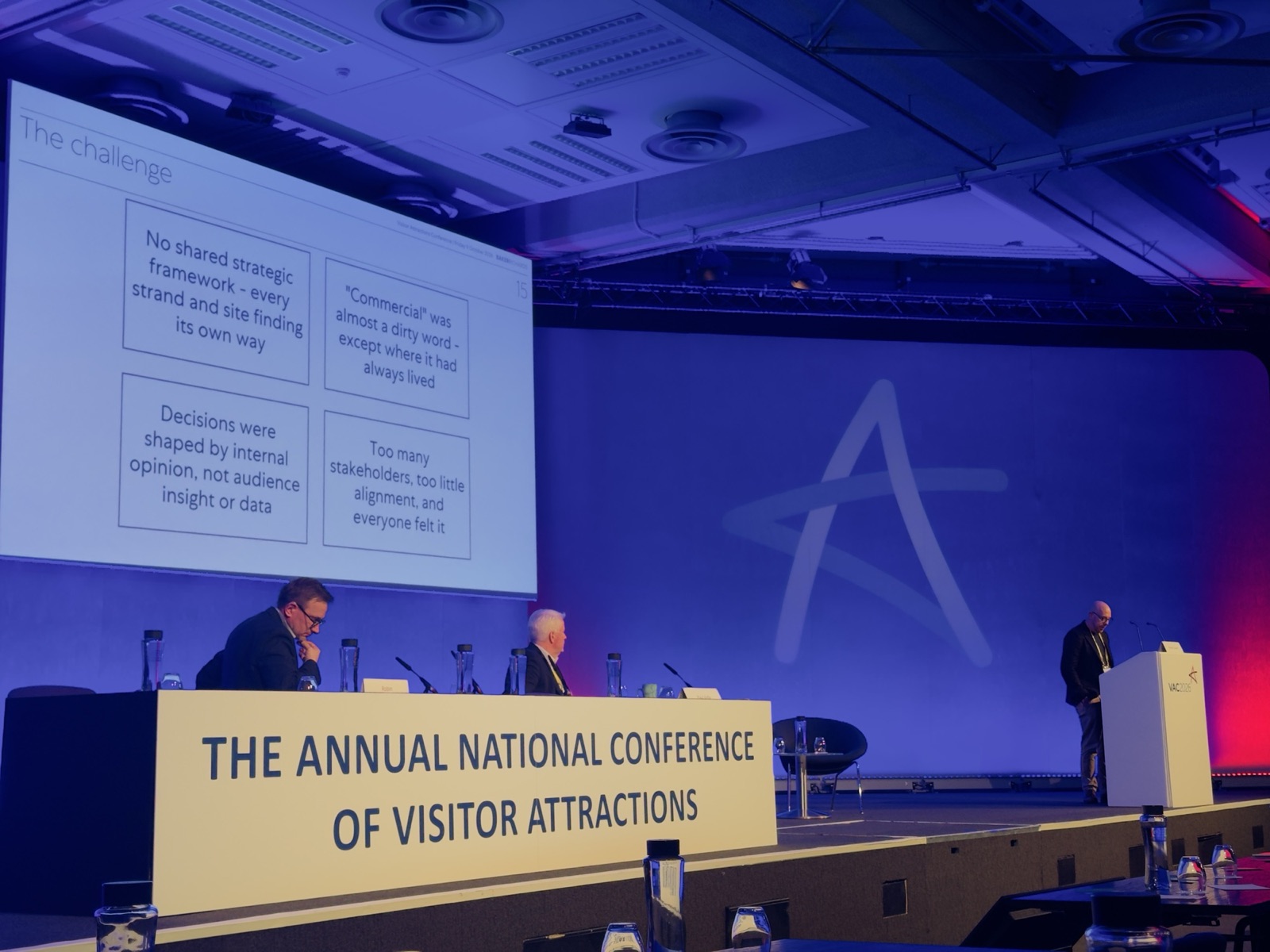
At VAC, Rhodri Davies of Amgueddfa Cymru (Museum of Wales) described how pricing had previously been shaped by internal opinion rather than audience insight. For the Gwen John exhibition, they started with the audience instead. 98% of visitors said it was good value for money, 86% were first-timers, and 13,000 people came in the first month against a target of 15,000 for the whole run. The target is now 40,000. A nice problem to have.
Bletchley Park's Rebecca Foy came at it from the other direction. Visitors aren't always great at telling you what works, so you listen for patterns: "If one person says it's not working, that's okay. If 1,000 people say it, it's a yes." They changed exhibitions based on that feedback. Fitting, for a place famous for spotting patterns.
Internal expertise is valuable, but it shouldn't be the only voice in the room.
The goal isn't to collect everything. It's to find the information that helps people make better decisions.
The bigger picture: the weather, the wallet and the experience
VAC 2026 made it clear that attractions are navigating several pressures at once: increasingly unpredictable weather, cautious household spending and rising operating costs.
However, there was good news too. Ipsos reported that 77% of UK adults visited an attraction in the past year, up from 72% a year earlier. ALVA members rose 10% last December, driven by winter lights and Christmas programming. When attractions give people something to come for, they come. Some are adapting in real time: Castle Howard now decides on late opening based on the temperature, as more visitors use the cooler end of the day.
None of the five experiments needs a new technology platform, a bigger research budget or a three-month strategy workshop. Start small, involve the people who speak to visitors every day, and decide in advance what you want to learn. You might confirm a hunch or discover something entirely unexpected. Either way, you'll have a stronger basis for your next decision than "we've always done it this way".
And if your first experiment involves a spreadsheet, that's absolutely fine. Just make sure there's a visitor's perspective somewhere in it.
Why this matters to me as a founder
A few years ago, I got completely lost in Heidelberg Castle. One of the most beautiful places I've ever been, and I spent half my visit wondering where I was, what I was looking at and what I was missing. Nobody counting visitors that day would have known. I was just one more person through the gate, slightly lost and doing my best to look like I wasn't.
That moment is a big part of why I am building BAENAV around a simple belief: places should understand their visitors as people, not just numbers on a report.
I am fascinated by the small moments during a visit: the questions, curiosities and moments of confusion. By the time someone writes a review, they might remember the café queue and completely forget the brilliant story around the corner.
Attractions don't need another dashboard just for show. But we can close the gap between what attractions measure and what visitors actually experience, as long as we collect information responsibly and turn it into something teams can use. Because the best insight isn't the most impressive chart. It's the one that helps someone make a better decision.
The conversation continues
Which of these five questions would make the biggest difference to your organisation right now? And what do you wish you knew about your visitors that your current data doesn't tell you?
If VAC taught me anything, it's that some of the most valuable insights begin with a good conversation.
Preferably one that doesn't involve staring at a spreadsheet all afternoon.
Sources
- DCMS Participation Survey 2024/25, main report
- Baker Richards / ALVA, family visitor research, July 2025
- Spektrix: Visitor Motivations, Robin Cantrill-Fenwick, October 2026
- Life Science Centre, Universal Credit tickets
- Museums Journal: creating an AI experience at Leeds Castle, April 2026
- Museums Journal: female artists draw in the crowds, May 2026
- ASVA Scottish visitor attraction benchmarking, May 2026
- Grant Thornton: tourist attractions, a sector taking stock, November 2025
- Museums Journal: museums face growing competition from digital experiences (Manifesto), November 2025
- Museums Journal: Met Office responds to visitor attractions, April 2026
- Ipsos (2026) Ipsos Consumer Tracker, Wave 144: Topline findings
- Visitor Attractions Conference (VAC)
- Association of Leading Visitor Attractions (ALVA)